Why Does Your Hair Frizz Again Hours After a Blowdry?
Frizz comes back after a blowdry because heat only holds the surface of your hair flat while it stays dry. Add water, sweat or humid air, and that surface lifts again. The puff returns.
That cycle is why we reach for Magic Sleek at Mak Salon in Eastchester. It changes how your hair behaves between blowdries, so you are not repeating the same styling every morning. The owner's Magic Sleek post on Instagram shows the result: hair that went from frizzy, textured and unmanageable to smooth, sleek and shiny.
Why does a blowdry stop working so fast?
A blowdry stops working fast because it shapes the hair without changing how the hair takes on moisture. Heat and tension flatten the outer layer of each strand, called the cuticle. Once that layer meets water, sweat or humid air, it lifts and swells, and the smooth finish gives way to frizz.
The cuticle is a set of tiny overlapping scales, like shingles on a roof. When the scales lie flat, light bounces off evenly and the hair looks shiny. When they lift, the strand pulls in moisture, swells, and scatters light instead of reflecting it. That is why frizzy hair looks dull as well as big, since one lifted surface causes both.
A blowdry flattens the scales for as long as the hair stays dry. It does not teach them to stay flat. Wash your hair and the whole process starts over, which is the daily cost of fighting frizz with styling alone.
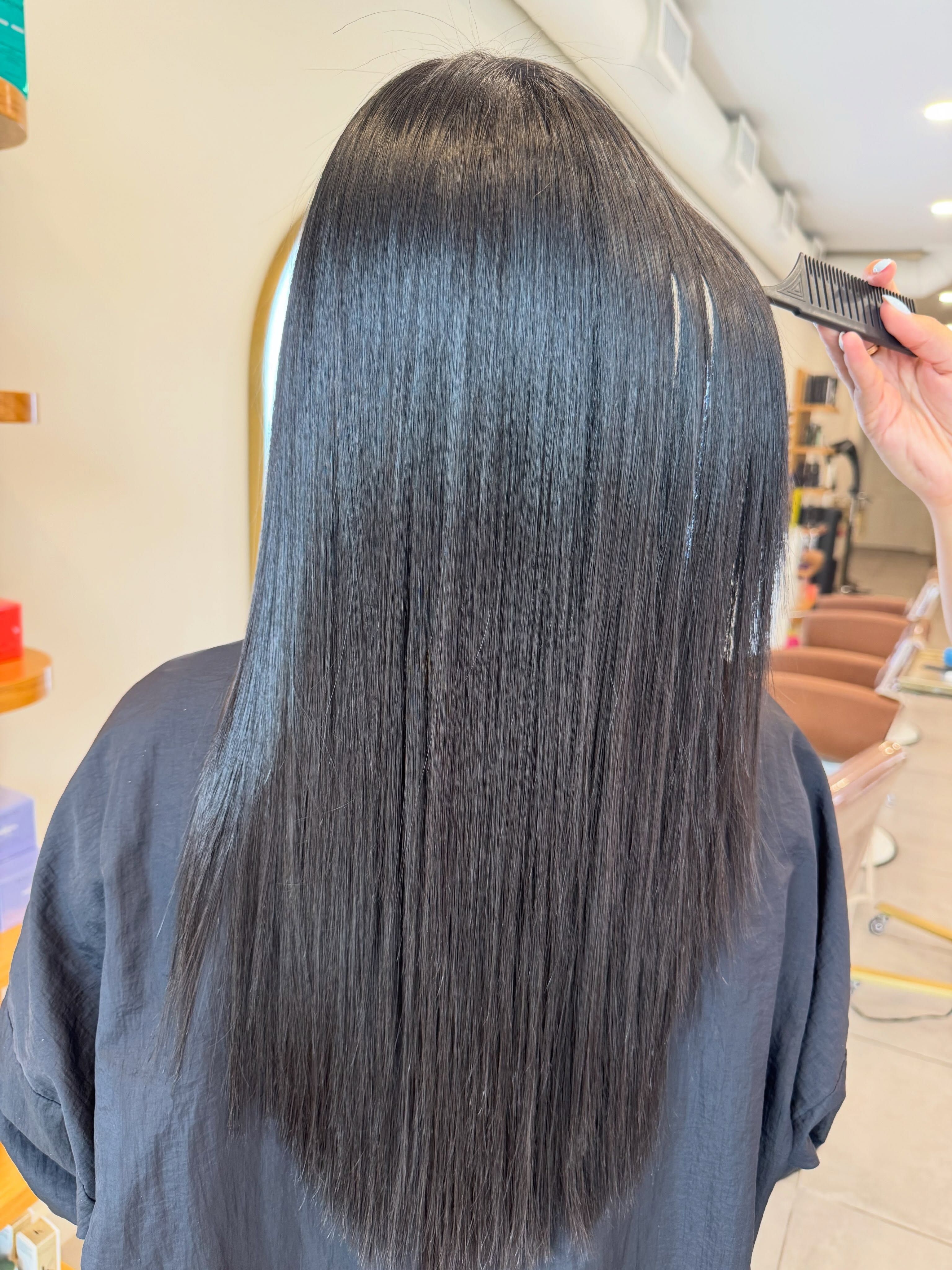
The before side of that photo is hair losing this fight every day. The after side shows a smoothed surface, calm through the lengths and soft to the touch. Light runs down the strand. It no longer breaks up on it.
What makes some hair frizz more than other hair?
Hair frizzes more when the cuticle sits open, and several things hold it open. Some you were born with, and others come from what the hair has been through. Knowing which applies to you tells you whether styling, a haircut or a smoothing service is the right fix.
- Natural texture. Textured hair has more bends along the strand, so the cuticle lifts more easily at each one.
- Color history. Lightening opens the cuticle and leaves gaps in it. Porous hair soaks up moisture fast and lets it go just as fast.
- Dryness. Dry hair reaches for moisture in the air, and the strand swells as it takes it in.
- Frayed ends. Split or ragged ends stand away from the rest of the hair. They read as frizz even when the top layer is smooth.
- Heat without protection. Repeated dryer and iron passes rough up the surface over time.
- Product buildup. A film on the strand keeps the cuticle from lying cleanly.
Most clients who come to us about frizz have two or three of these at once. Someone with textured, lightened hair and a few months of heat styling is not dealing with one problem. That is why a single product rarely fixes it.
What does the Magic Sleek result show about the fix?
The result in the owner's Instagram post shows frizz calmed at the surface, with hair that still moves and feels soft. The shine comes from a flatter cuticle. It is one person's hair, so read it as an example of the finish, not a promise for yours.
We shared that post because it shows the change we want from smoothing: smooth, sleek and shiny hair that still looks like hair. Smooth should never mean stiff. A result that looks flat in a photo and feels coated in your hands misses the point.
Magic Sleek is a smoothing treatment, and our Magic Sleek page covers the service itself. The idea is to help the cuticle lie flatter and take on less moisture, so your hair needs less work to look finished. It fades gradually. It is not permanent.
Want the full walk through of an appointment? Our guide to what happens at a smoothing treatment visit covers it step by step. Here we stay on why the frizz keeps coming back and what to do about it.
Blowdry, haircut or smoothing: which one fixes your frizz?
The right fix depends on where the frizz comes from. A blowdry fixes a single day, a haircut fixes the shape and the ends, and a smoothing treatment changes how the hair behaves between washes. Many clients end up needing two of the three.
A blowdry
A blowdry gives you a smooth finish until your next wash. It suits an event, a photo or a week when you want polished hair without changing anything else. The upkeep is the same styling again after every wash. Our haircut and blowdry guide explains what happens at that kind of visit.
A haircut on its own
Sometimes frizz is mostly an ends problem. Hair that is cut well lies better and looks less frayed, so if your hair is healthy and the shape is what bothers you, a cut may be all you need. We check every cut dry before you leave, and we explain why in a separate post.
Magic Sleek
Magic Sleek works on the surface of the strand, so the benefit carries through washes and fades gradually. It suits clients who want their hair to behave with less styling. Its upkeep is the home routine further down this page, plus a return visit once the smoothness fades. Current pricing lives on our service menu, and nowhere else.
We choose between smoothing options by feeling your hair dry. We look at your texture, your color history and how much natural movement you want to keep. Keratin treatment is another smoothing option clients ask about. If you have had one before, tell us how it faded and what you disliked, because that steers the choice better than any product description.
Who is Magic Sleek for, and who should skip it?
Magic Sleek suits hair that frizzes no matter what you do and costs you time every day to tame. It is a poor fit for hair you love for its volume and defined texture. We say so plainly because it protects you from a result you would regret.
Who it suits
The clearest fit is a client who fights frizz daily. It also suits anyone who blow dries for a long stretch and still has frizz by midday. Hair that feels rough to the touch is another good sign, and so is wanting more shine without a color service.
If that sounds like your mornings, you can book a Magic Sleek consultation and we will look at your hair together.
Who should think twice
If you love big, bouncy texture and only want it softer, tell us. A smoothing treatment can calm more than you want it to.
If your hair is badly damaged, smoothing is not a repair. It can make damaged hair look better for a while, but broken ends still need a cut. Sometimes the right order is a haircut first and the treatment later.
If you have bleached, box dyed or had other smoothing services, tell us all of it. Smoothing can still help porous hair, though on lightened hair the result tends to fade sooner, and the plan has to account for that. We would rather hear your history before we start. Surprises halfway through help nobody.
How do you style your hair at home so the smoothness holds?
You keep smooth hair smooth by protecting the cuticle at every step: gentle washing, full drying and controlled heat. These steps apply whether you have had a smoothing treatment or you simply want more from a blowdry.
- Wash with a gentle cleanser. Strong detergents strip the surface. Shampoos labeled sulfate free take less off, so the smoothness holds through more wash days.
- Condition the mid-lengths and ends. The ends are the oldest, driest part of the hair, and they frizz first.
- Blot, do not rub. Press water out with a soft towel, because rubbing roughs up the cuticle before you have started styling.
- Apply a heat protectant. Spray it through damp hair before any dryer or iron touches it. Done right, the hair feels slightly conditioned, not coated.
- Dry with the nozzle pointing down the strand. Airflow from root to tip lays the cuticle flat. Finish with a cool blast to set the shape.
- Dry the hair completely. Damp hair swells, and a pillow roughs it up overnight. Done right, the hair feels cool and dry all the way through.
One more step applies after a smoothing service. Most smoothing treatments ask for a short wait before the first wash, and your stylist gives you the exact window for yours. The treatment needs time to set on the cuticle. Water, sweat and shampoo in that window can lift the scales again before they settle.
Tight bands and sharp clips are worth avoiding for the same reason. A dent left while the treatment is still setting can stay.
Can you do a blowdry on dry hair?
Yes, you can refresh dry hair with a blowdry. Dry hair has no moisture to protect it, though, so the heat does more harm. Lightly mist the section with water or a heat protectant first, work in small sections and keep the dryer moving.
A dry blowdry works for a quick touch-up at the front, where you can see it. As a daily routine, it dries the ends further, and dry ends are the ones that frizz first. Hair that is already frizzy needs extra dry heat least of all.
What do people get wrong about frizz?
The most common mistake is treating frizz as a styling problem when it is a surface and moisture problem. It costs people time every morning, and often a drawer full of products that do not help. These are the patterns we see most:
- Adding more product. A heavy layer can weigh the hair down and still leave the cuticle lifted underneath.
- Judging the result at the first mirror. Hair looks its smoothest right after a visit, so judge it on your own wash day.
- Expecting a flat iron result. A flat iron makes hair straight for a day. Smoothing changes how hair behaves over time, so the two are different tools.
- Skipping the haircut. Frayed ends make smooth hair look rough. The cut is never an afterthought.
Each of these is avoidable. None of them is your hair's fault.
What if you have never been to our Eastchester hair salon before?
A first visit at Mak Salon begins with a conversation, not with a product going on your hair. The worry we hear most from new clients is whether anyone will listen before they decide.
One client put it this way in a Google review: "Once you go there the first time you will keep going back to them cause they are like family!!" Another client wrote that they wanted to keep their length, and that the salon listened and respected exactly what they asked for. They left feeling confident.
That second review describes the job as we see it. You tell us what you want to keep, and we plan around it. The plan starts with you.
A smoothing treatment is a bigger decision than a trim, so we would rather you ask every question first, including whether to book it at all. Mak Salon is owned by Marie, and the plan is explained before any work begins.
Frequently Asked Questions
Why does my hair frizz right after a blowdry?
Usually some sections still held moisture when the drying stopped. Any damp section swells again as it finishes drying, and the surface lifts with it. Dry every section completely and finish with a cool blast to set the shape.
Can I do a blowdry on dry hair?
Yes. Protect it first, because heat on dry hair dries the ends further. Mist the section with water or a heat protectant and work in small sections.
How long does Magic Sleek last?
It fades gradually rather than ending on a set date. We do not promise a number of weeks because your hair sets that timeline. Washing gently, drying fully and using heat protection are the parts you control, and porous or lightened hair tends to fade sooner.
Is Magic Sleek a keratin treatment?
No. Magic Sleek is its own service, and keratin treatment is another smoothing option clients ask about. Both aim at less frizz and more shine. We choose between them by feeling your hair dry and weighing your texture, color history and how much movement you want to keep.
Will Magic Sleek work on curly or wavy hair?
Yes. It can calm frizz on curly and wavy hair, so expect smoother and softer, not a flat iron finish. Tell us how much of your natural texture you want to keep, and we plan around it.
Can I color my hair if I get Magic Sleek?
Yes. Color and smoothing can work together, but order and timing matter. Tell us everything you have planned, from balayage to highlights, so we can sequence the services as one schedule.
How much does Magic Sleek cost?
The price depends on your hair, mainly its length, density and the time it needs in the chair. Current prices are on our service menu, and that page is the only place to find the numbers.
Book a Consultation
Bring two things to your Magic Sleek consultation at Mak Salon. The first is a photo of your hair dry on an ordinary day. The second is a list of every color or treatment it has had. With those in hand, we can tell you in the first few minutes whether Magic Sleek is right for you. Sometimes a cut should come first. Book your Magic Sleek consultation and we will take it from there.
You can find us at our Eastchester salon on Mill Rd. Clients come to us from Scarsdale and across Westchester County, and for many it is a short drive.